Category: Leadership

  • Self-Discipline Part 2

    Self-Discipline Part 2

    Self-discipline can be broken into two portions: the will to get the actions turned into habits, and the ability to create incentives to keep the habits going, long after passion fades away.

    The first thing we need to do is set some clear goals, which you can take from the personal development plan we created earlier. Next we’re going to look at the time audit we did where we broke everything into ten minute sections. We’re going to act like project managers for our days, and we’re going to micro-manage our time (to start) to make sure that our time we plan on investing in our goals is actually implemented.

    Use everything you can to help you: calendars (paper or digital), any number of apps, kitchen timers or alarm clocks, whatever it takes to remember you have something to implement, and that you actually do it.

    When you’re starting this out, it’s important to keep it as conscious as possible, if need be saying out loud “Now I’m going to study for my LSAT exam”. Commit to the time you chose. It will likely be a few weeks until it’s consistently ingrained in your schedule that it feels natural.

    The next question is “what will keep me doing this day-in, day-out?” The answer I’ve found works well is a good old-fashioned bribe.

    Take something you want, if it’s a tool set, a new car, a purse, a vacation, whatever you know you want to get. Make sure it’s size lines up with the size of the goal, so don’t use a new car as incentive to get to the gym four times a week or a new video game as incentive for completing medical school.

    Take this item and divide it down into small chunks, financially. If you’re looking to train your son to make his bed and clean his room every morning before breakfast, take stock of what size incentive would make sense, and how long is this of a goal to reasonably keep their motivation high – can they see a light at the end of the tunnel?

    In this example, a good method would be to break the $60 video game into $1 per day for successfully completing each day. This means the earliest he could get the video game would be about two months.

    This strategy has three benefits, all of which help build self-discipline. First, it breaks the goal into sizes that are big enough to chew: to a boy who wants a video game, two months is an eternity, but breaking it down into daily pieces is enough to get your arms around.

    Second, it provides constant forward momentum. After 15 or 20 days in a row, it’s starting to become “just what you do”, and as the count goes from 34 to 35, now 36, your son (or you) will be hesitant to break that momentum.

    Third, if you stumble, you’re not starting from absolutely zero. It’s easy for someone who wants to do a habit every day, like reading or studying, to get disappointed in themselves if they miss a day. Even worse is when they miss two days in a row, because now instead of positive momentum, they have negative momentum. Instead of thinking that they’re failing and sinking even further, it’s just one day of successful action to get right back into gear. Removing the catastrophic failure of thinking that your first missed day after 50 days of success means you’re starting at zero, makes the stress of missing a single day a bummer, but not something that distracts you from getting back into the positive habit you’re building.

    This same logic and strategy can be applied to teenagers with video games as well as grown men who want to get a professional certification and grown women learn a new industry.

    Just because it’s simple doesn’t mean it’s ineffective. The opposite is true: it’s easy to understand, simple to implement, and highly effective in building habits. Many people who graduate from school fall into bad habits because so much of the structure in their day to day life comes from schooling. If you take that structure away and don’t consciously replace it with something else, that vacuum is going to do nothing but cause trouble for you – know that is going to be an issue and actively work to replace it.

    The next thing to do is eliminate time wasters.

    After you’ve done the time audit we talked about in an earlier chapter, it should be obvious how much time there actually is in the day. Most people are just wasting the majority of theirs.

    The things that waste time will be highly contingent on what your goals are, and in what quantity you participate in them. Playing catch with your son once or twice a week is a great way to bond and talk about whatever’s on his mind. Unless your son wants to go pro, five days a week for the same is likely you procrastinating on a task that you know you should be focusing on.

    This procrastination is very frequently a symptom that you’re afraid of something. Many people find it easier to stomach the failure of not trying than trying and failing. This is why so many people find useless tasks to focus on that are related to their goal, but not urgent and important.

    If you’re starting a new business, you need one thing: paying clients. If you’ve ever been in sales you can see how cold-calling for new business can be intimidating, especially when you’re creating a new venture and can’t trade on an established name. You spend hours thinking about how people are going to laugh you out of the room, absolutely amazed at the nerve you had to even talk to them!

    Then you spend hours looking at your logo, if maybe the red section should be more of a maroon, or maybe crimson. Is your company slogan catchy, easy to remember, and shows what sets you apart?

    Admit to yourself what you’re doing, you’re putting off the work that you’re afraid of. Once you come out and name the problem, solving it is halfway done.

    Acquiring and practicing this self-discipline isn’t a weekend retreat: you’ll be working on this for the rest of your life.

    Being able to understand that this isn’t a crash diet, but a permanently changed menu is a big step in getting the discipline that gets you to where you want to go in life. Also remember, you’re not going to go from mozzarella sticks and milkshakes to spinach salads overnight.

    Too many people think they can grab the steering wheel and turn a cruise ship around. They want to become someone who exercises every day, reads an hour a day, eats perfectly and more; worse is that they try to start all of it at once. They’ll spend a week or two living like a spartan and then two weeks later are back to exactly where they started, except now they’re demoralized at their failure.

    Instead, slowly build up discipline in different areas of your life, at different speeds. My personal recommendation is to start with either earning more money or exercise and diet. Earning more money is very motivating but difficult for most people to ramp up quickly.

    Exercise, on the other hand, is something that almost every one of us could put more effort into, and see results very quickly. Even just 10-15 minutes a day of exercise, enough to go from sedentary to breaking a sweat can compound over the course of a month to noticeable differences. You used to get winded carrying groceries up the flights of stairs to your apartment, now you don’t. You moved one notch down on your belt. Your pants don’t fit as well now, but in a good way.

    These small wins are incredibly powerful for the psychological momentum needed to become a seriously disciplined person. They are tangible, easily measurable, and can remind you multiple times per day of your success.

    Every day that you put your belt on and notice you’re one notch lower, you’re reminded of the success you had. That success affects you both consciously and subconsciously. You’re going to notice that not only is it easier to overcome the “maybe-just-skip-today’s” but you’ll notice that the thought gradually stops coming to you.

    The thing you’re doing, everytime you exercise the will power it takes to make the right choice: eating healthy, helping your kids with their homework, helping a coworker through a problem; all of these are putting money in the option bank.

    When you’ve spent the last six months eating healthy for almost every meal, and the Fourth of July barbeque comes around, guess who’s got the option to eat three plates of food and dessert, and not feel a second of guilt?

    When you’ve helped colleagues through problems, stayed late to meet deadlines and worked extra to beat quotas (if your boss is good); guess who won’t mind if you take a Friday off early?

    What you’re doing when you make these sacrifices is that you’re not throwing the time away and getting nothing in return. You’re building up the money in the option bank so later, you can have a choice.

    If you spend years saving money and earning as much as you can, and all of a sudden there’s an emergency you have the choice to pay to get the problem solved.

    If you didn’t spend the time and effort saving up, you’d just have to eat whatever life puts in front of you, which is usually not an ice cream  sundae. What if your car breaks down and you can’t afford a new transmission, guess who just missed their shift? Now you’re still out of a car, but you also just lost your job, and good luck getting a new job without a car. It’s very common for small problems to snowball into life-changing

    If you had done the hard work of being disciplined up front, you would write a check to the mechanic and moved on with your life. Instead you went to the bar 3 nights a week and now you’re wondering about next month’s rent.

  • Self-Discipline Part 1

    Self-Discipline Part 1

    In our previous chapters, we talked about how the topics of the three previous chapters work together. In our analogy, we’re sailing a sailboat to the North Pole.

    This is done by using self-awareness as an understanding of where your starting point on the journey is, with a focus on radical honesty, as lying to yourself is as useless as not even starting to reflect.

    Next we have self-accountability, which means that no matter where you start, it’s important to understand you were the one who got you there. You are the sum of all of the life choices you have made up to this point, and instead of being paralyzed by regret, you’ll use that to jumpstart positive change.

    Next we have self-leadership, that makes sure that we’re constantly keeping the ship going forward, and checking our compass to make sure that we’re not just going forward, but that we’re heading due north.

    What happens when you’ve got the boat headed in the right direction, you’re moving forward quickly, and all of a sudden the weather turns. Whipping winds and stinging rain push you below deck.

    Now you’re hoping to sit below deck and wait for the rain to subside, and every minute you wait you’re veering further and further off course – and you don’t even know it.

    This is where self-discipline comes into play. Self-discipline is where you make the serious commitment to yourself, knowing that there’s going to be dozens or thousands of times you want to give up, but refuse to.

    Self-discipline is the committed and conscious acknowledgement that simply put: sometimes it’s just going to suck.

    Depending on what your goals are, the self-discipline will show itself in different ways, and the ways that you’ll try to avoid them will look different, but they all cut to the core of the issue.

    If you’re a boxer who has to wake up at 5 am to (hopefully not) get punched in the face, anyone can imagine how difficult day 100 of that training could be. Not every commitment to discipline is as obvious as it is for a boxer, it could be a mom who’s exhausted from her job that comes home and doesn’t want to cook for the kids.

    If she’s exhausted and doesn’t want to cook a healthy meal, maybe once she’ll order a pizza. Then it happens again three nights later, and again the day after that. Now the kids are eating pizza and fast food five nights a week, and she’s not living up to the personal development plan she made for herself and her family.

    She had plans to feed her kids healthy, home cooked meals as often as possible. While she wasn’t training to be a Navy Seal, being a mother who wants the healthiest options for her children is absolutely something that requires discipline. It just looks different, but it comes from the same place.

    Both come from the place of taking the easy way out, right now, when you know you’re going to regret it later. A 45 second phone call to the pizza place is easier tonight, but in five years everyone is going to regret those easy decisions.

    Self-discipline is one of the most crucial steps we talk about in this book because it’s where the thoughts, plans, and goals turn into real-world action.

    Everyone knows what it takes to have six-pack abs, or millions of dollars in the bank: for 90% of the population it isn’t a lack of knowledge, but a lack of the discipline to execute consistently, even when it isn’t fun, even when it’s raining, even when your friends are doing XYZ.

    It’s a cliche, but ask any fit person about gym memberships in January. January 1st rolls around, and there’s suddenly dozens of new faces, with treadmills and weight machines having waiting lines. Then February 1st rolls around, and about 75% of them have disappeared, and it’s not because they lost their goal of 75 pounds in one month.

    It’s because it’s easy to ride off of passion. When you’re enjoying New Year’s Eve, everyone talks about how this year is going to be different, but when it’s 6 am and snowing, suddenly the gym can wait until tomorrow.

    Self-discipline is knowing that you might not always be passionate, but you always have to push through it. Luckily, we know how to set yourself up to be as successful as possible when it comes to self-discipline.

  • Self-Leadership-Part 3

    Self-Leadership-Part 3

    We now know how to audit our time, to assess our self-leadership, but we can help even further explain how to become more effective and efficient leaders of ourselves.

    The first thing we need to do is be empowered to make our own strategy. This comes with a few requirements.

    First is the confidence to know that the rules are changing, which means the limits that we had on our previous strategies: real or fake, internal or external, all of them have to be re-assessed with fresh eyes. Like everything in life, it’s easier to ask for forgiveness than it is permission, so removing limits that you think might be imagined can always be quickly corrected and brought back into the calculation if you’re proven wrong. If you’re right though, and it wasn’t a real limit, you just greatly expanded the possibilities moving forward!

    Next is the courage to know in your heart that you will likely have failures along the way. For every successful business, more than a dozen attempts will fail. For every single three-pointer that Michael Jordan made, he also missed one…and he’s Michael Jordan! Failure is not only possible, it’s likely. This doesn’t mean you shouldn’t work to minimize the cost of failure, or avoid obvious roadblocks, but you should accept that if you drive down enough highway, there’s going to be a few pot holes.

    An odd part of life is that if you’ve never experienced failure, then you’re not taking big enough risks. If you spend life focused on never being lower than first place, you’re never going to be fighting above your weight class, always focused on being the big fish in the little pond – which for most people ambitious enough to read a book like this is a tragedy in itself!

    It’s not always just “go bigger” in life. Personally, one of the things I’ve focused on improving in life is the soft skills side of business. I’ve never had trouble with hard work, or learning difficult concepts, but I knew that a part of what was holding my career back was my soft-skills needed to be improved.

    The fear of failure I was facing wasn’t about talking to CEO’s about what the problems were, or not understanding difficult situations, but failing to see how the little things, like being personable and sociable, can make it easier to achieve bigger and better goals.

    When you’re not only the guy who knows the most about a topic in the room, but the guy every likes and wants to see succeed just based off your personality, the fact that you know more means you’re going to get 100 times more accomplished than someone who snubs the receptionist and is sarcastic in meetings.

    This is one of the areas where mentorship can really accelerate your success. In a work environment, after a few years, you can very slowly get into bad habits. Sometimes so slowly that you don’t notice them.

    Imagine one day you ran late and skipped brushing your teeth. Then you stopped brushing your teeth every day, instead just every other day. Then after a month, every third day, and soon it’s once a week. Now you start talking to a stranger for the first time and they shout “OOH-WEE! Your breath stinks!”

    This is the advantage that mentorship can bring into life. Because they’re not constantly seeing you every day, but maybe once a month, maybe once a year, they’re going to be able to look at you and tell you, if you want to get to the North Pole, what the heck are you doing going southwest?!

    Mentors are the equivalent of having a port you can put your sailboat in, and they can tell you that your maps are all outdated, and your compass is crooked. The best part is they can save you years of work, without you even knowing you’re investing in all of the wrong areas.

    Even if you haven’t found a mentor, there’s likely other people in your life who can serve the same purpose. It might be a spouse, a friend from your past, previous colleagues, anyone who has the chance to see you over a long term period of time, and can have an external view.

    Another part of self-leadership is knowing that somethings just have limits, even if they’re critical for your success. You need to focus on keeping a steady ship moving, not just moving as fast as possible.

    To do this, you need to find out what the limits are by talking to the people in your life who you affect.

    For example, if you’re trying to grow your new business, and are putting every single dollar you make into it – which is very common for entrepreneurs to do for years, sometimes – there’s other people who need to be consulted.

    Just because you’re comfortable living on ramen and beans for the three years you think it will take to get your business where it needs to be, doesn’t mean that your spouse is comfortable there.

    This is where you need to find out what the limits to how hard and how fast you can push certain variables. You might want to be the next Elon Musk, but if spending time with your children while they’re young is something you value, you need to make that a conscious choice.

    Remembering back to the time audit we did earlier, if your goals include spending time with your kids, it’s not time wasted as long as it doesn’t derail your other responsibilities.

    That being said, you can’t use the fact that you love your children as an excuse to prevent you from going after your dreams. You have to make the tough call that sometime you might need to sacrifice one for the other, but make it consciously.

    With everything in life, it takes a balance, but finding out what that balance will look like is one of the core components of self-leadership. Having a conversation with yourself and the people you affect about really what the goals you have will be the guiding light that lights the way for self-leadership.

    The good news is that since you’ve bought this book and read this far, you’ve already started taking real action towards that goal.


  • Self-Leadership-Part 2

    Self-Leadership-Part 2

    Self-leadership is the constant step of focusing on forward motion, and taking out your compass to make sure you’re always still heading north. Constant action in the wrong direction can be just as harmful as standing still, sometimes worse.

    This is a constant three step process. As your journey keeps moving forward, you need to keep checking your sails to make sure the wind is moving you in any direction: this is self-leadership.

    Next, you need to make sure you’re constantly checking the compass for due north: this is self-awareness. Finally, having the courage to look at your compass and know that north actually means north, and not “let the wind take me where it wants” is self-accountability.

    The good thing is that as long as you’re constantly checking the compass for true north, don’t lie to yourself about what true north is, and that there’s always wind in the sails – you don’t need to worry much more about getting to your goals, it’s just going to be a bit more time until you’re having hot chocolate with Santa.

    The trouble that most people run into with this is realizing that you need to keep running through the cycle. It’s not a recipe to cook, and then you’ve “succeeded”; it’s a constant turning of a crank through those three steps mentioned above.

    It’s easy to become complacent after the first few miles of the journey, and believe that the journey is “on a good trajectory”. The reality is that currents and wind can change direction in an instant, much faster in real life than in a sailboat.

    Industries can be destroyed in a blink of an eye, ask any travel agent what happened when the internet came along. Your personal goals can change as quickly as a car accident or a family member gets sick. This is why it’s a constant cycle, in good times and bad, to keep rotating through these three steps.

    One of the important reasons that self-leadership is so important is because of passion. Passion is great when it’s getting you to jump out of bed, ready to conquer the day, but that’s not always there, and relying on that is setting yourself up to fail.

    “The difference between a professional and an amateur is that while the amatuer relies on passion for progress, the professional relies on habits and self-discipline to fill in for the days passion doesn’t show up.” – Greg Gylling, Author

    The reality of life is that everyone on Earth has 24 hours in their day, 7 days in their week and 365 days in the year. The difference between people who have achieved everything they want, and people who sit and suffer silently is the ability to really look at how their time is used.

    The best way to show your true motivations is to look at the difference between where your plan was, and where you actually focused your efforts.

    If you’re serious about getting your finances under control, take a month and look at what your budget was against the receipts of everything you bought. Sure you “really wanted to save money” but when you’re forced to look at each lunch eaten out, or money spent at the bar, or any other thing you promised you’d avoid, you’re getting what your true motivations are.

    It turns out that getting out of debt just really wasn’t as important as a taco lunch with two beers and appetizers.

    This same strategy is even more powerful when you focus it on the only finite resource you have: your time.

    A funny part of life is that people who would drive 15 minutes to save a penny a gallon on gasoline rarely treat their time as valuable as a few dollars. You can always make more money, but you can’t make more time.

    A great exercise to show your real preferences is as follows.

    Attorneys are known for billing every single minute possible to their clients, so they have to keep meticulous records. Attorneys can tell you what they were doing from 3:30-3:40 on January 17th, 10 years ago; and if you want to focus your time as effective as they do, then copy what they do!

    Take two pieces of paper, and along the left hand side, divide it into 12 sections vertically, and label them one through twelve. These are going to represent the time from midnight to noon on the first page, and then noon to midnight on the second page. Then make 3 rows of 2 lines within each of the twelve rows. Each of these lines is going to represent a 10 minute segment, meaning you’ll have 3:00-3:10 on one line, 3:10-3:20 on the next and so on, until your full day is accounted for in ten minute increments.

    First comes the simple part!

    You’re going to record everything you do in a single day, in ten minute increments. It will take 5 seconds per section, and if you work for 3 hours on something you don’t need to fill in multiple lines, just draw an arrow until you’re done and moved onto another task.

    Now comes the painful part!

    What we have are the “receipts” for how you actually spend your time. Sure you budgeted for 30 minutes in the gym, but it turns out 30 minutes was actually spent “settling in the office” in the beginning of your day. Between getting a cup of coffee, catching up with co-workers about last night’s big game, refilling the coffee and finally sitting down at your desk, it’s been almost 45 minutes before you actually start the work you’re hired to do!

    Add in 15 minutes talking about where to get lunch with co-workers, 10 minutes on how the boss is a jerk and the quota’s we have are totally unachievable, 45 minutes at lunch, and then 15 more minutes to “settle back in” to work, plus 20 minutes of “checking facebook”, you’ve burned close to an hour and a half on something that gets you nowhere.

    The point of this exercise isn’t to make it so you’re going crazy over not wasting a single minute of your time, or not being polite to colleagues, but to make you conscious of the time that you are wasting now without thinking.

    When you do this for a whole week, which is enough for most people to consciously observe their behavior, you’ll see how quickly things like Facebook become (unpaid and totally unproductive) part-time jobs, with minutes adding into hours faster than you’d think. How many of these jobs have you signed yourself up for without ever thinking about it?

    Over the course of six months, even ten minutes in the morning, ten at lunch and ten at night turn into almost 3 work-weeks! Imagine what you could do if you didn’t let yourself get off course like that and found 3 free weeks of work you could bring back to your life, how much faster would you achieve your goals?

    • Would you have been able to get a realtor’s license and have a new source of income?
    • Would you have been able to complete a professional certification and brought your career to the next level?
    • Would your relationship with your kids be better if you could spend 3 extra weeks with them?

    Even just taking the time to write down a few days can be enough for your subconscious to kick in, whenever you open up Facebook, or start up the Xbox, or think about heading to the bar for what you know is another night of wasted time, money and likely brain cells.

    You know that no one but yourself is going to know, maybe you’re not really wasting your time, but when you shut the TV off, that’s when you’re exercising the self-leadership it takes to get what you want out of life.

  • Self-Leadership-Part 1

    Self-Leadership-Part 1

    Let’s do a quick recap of where we’ve come from. First we had to figure out where you are on your journey to success, in a totally honest way, which we covered in the chapter of Self-Awareness.

    Next we had learned how to hold ourselves accountable for what got us to where we are today. We discussed how to create a personal development plan to map out our different responsibilities in life, what those mean in specific, day-to-day terms, and how to monitor and measure our success on aiming for and achieving those goals.

    We’re able to quantify success in each of those categories and can use those to influence our behavior every day. After a few months, we’re able to look back at how we spent our time and how to audit whether or not we’re spending our time on the most important and most urgent tasks and what to do with tasks that don’t fall into that category to keep us focused on our highest and best use of our limited free time.

    Now we’re going to focus on self-leadership. Self-leadership is the next step, the one that develops and implements the strategy to improve yourself.

    This is where you set the vision for where you want to be. The best professional athletes visualize the game before they step on the court, seeing their path to victory in their mind. After that, all they need to do is execute on the path to victory – the hard work was visualizing what success would look like.

    Similarly, you need to visualize what kind of leader you want to be. This isn’t just for tomorrow but one month, six months, even five years down the road, what skills will you have acquired? How will you have grown your circle of influence? How have you set yourself up for success – if it’s through reward systems, what do those look like?

    When we talked about self-awareness and self-accountability, the name of the game was having to develop habits. Now that we’re here in self-leadership, you’re going to set what changes you’re going to put in place so that you can develop good experiences that then become habits. These habits accumulate, either positively or negatively, over time and will transform you into the leader that you focused on becoming.

    Notice that I didn’t say “the leader you want to be” but the “leader you focused on becoming”. Everyone wants to be an incredible leader, but like six pack abs or a big bank account, it doesn’t matter what you want, it matters what you consistently do.

    That’s where self-leadership comes in.

    Imagine, conceptually, that you wanted to sail a boat to the North Pole.

    Self-awareness is you understanding whether your starting point is in Maine or Mexico City. Both journeys will require very different preparation, and different help along the way, and self-awareness is going to dictate what clothes to pack, who to talk to, are there rivers nearby you can travel on?

    Self-accountability is you understanding that you’re the one who somehow ended up in Mexico City or Maine, and no amount of pouting or complaining is going to change where you are right now. It also means you realize that you’re going to have to move forward if you ever want to get to the North Pole.

  • Selling Maintenance as a Profit Center

    Selling Maintenance as a Profit Center

    The best way to change perspectives is to show the entire organization how maintenance provides value.

    By Joe Anderson | Oct 13, 2015

    Throughout my years in manufacturing maintenance, I have faced situations in which my peers and managers above me have had no understanding of the value of maintenance. For a long time, I blamed them. As I have matured in my management journey, I have come to understand that it is my job to educate everyone, not just those for whom I am responsible, about maintenance’s true worth.

    Example 1: Cost avoidance related to a vacuum pump failure
    When a vacuum pump failure occurred on a production line, the total cost associated with that failure was $9,523:

    • 1 vacuum pump = $2,700
    • 3 hours of downtime = $2,250
    • 1 hole in the wall repaired = $500
    • Emergency weekend work = $4,073 (four support techs were scheduled, multiplied by two shifts to run new wire and fix conduit. This 64 hours of work multiplied by $57 per hour = $3,648 in labor + $425 in materials)

    By contrast, early detection of a similar vacuum pump failure incurred a total cost of two hours of downtime, which is equal to $1,500. (The pump from the manufacturer was faulty, so we will receive a replacement free of charge.)
    This is a cost avoidance of $8,023.

    The  awareness gap results from management having limited or no knowledge of the maintenance function and its ability to contribute to the manufacturing process; and maintenance personnel, managers included, having limited understanding of the business side of manufacturing. The result is that management and maintenance often are often unsure how they together contribute to the company’s success.

    Your company’s maintenance attitude

    When I ask managers or hourly workers what their organization’s perception of maintenance is, I tend to get the same types of responses. I hear things like:

    • Maintenance is a cost center
    • Maintenance is a necessary evil
    • Maintenance is the cost of doing business
    • Maintenance personnel are firefighters

    When asked to define maintenance, they offer words such as fix, restore, replace, recondition, patch and rebuild. I’d say these are reactive definitions of the word. What is maintenance? Maintenance is to maintain or the act of maintaining. The basis for maintaining is to keep something in a specific state or condition – that is, to keep it (the asset, in our case) in an existing state or preserve it from failure or decline. There is a world of difference between this definition and the words and functions normally recalled by most people who are “knowledgeable” about the maintenance function. The best way to change the perspective is to show the entire organization how it is that maintenance provides value. To keep things simple here, let’s focus on three types of value: convenience, process improvement, and financial value.

    • Convenience is sold through a demonstrated or statistical approach to prove that a plant will be safer and will produce higher-quality product, resulting in less rework. Greater production efficiency means lower costs; lower costs gives us marketing advantage; marketing advantage and enhanced competitiveness can promote job security. You empower people to do what they know to do by providing the proper tools and removing obstacles to their getting it done.
    • Process improvement is sold through less downtime. This means running to plan, which makes the production manager look like a superhero. Better asset use improves capacity, which means more volume, more profit, and more recognition. Also, less downtime results in less frustration, raising morale and helping to drive culture change.
    • Financial value is sold through the freeing of cash flow, reduced costs, and higher profits. These all translate into two things: higher stock value and more capital for reinvestment into the company.

    Manage in three directions

    There are three directions in which a manager has to manage: up, out, and down. Managing up, out, and down means sharing your vision for your department and educating everyone you can on what true, proactive maintenance is. I have to educate the upper management, my peers, and those I am entrusted to manage. It is your responsibility as well (no matter your title).  As a maintenance manager, I have not just a responsibility but an obligation to educate those around me on the maintenance function and the ways that we add value. So, let’s look at the three ways. Let’s start with managing those we are entrusted to manage. Although all three of these areas are intertwined and affect everyone, the best way to sell this group is through convenience. Going home to their family with all limbs intact, not having to endure a day of hard labor, and striving to be the best are great ways to motivate this group. Convincing this group takes execution of low hanging fruit for quick wins. The goal is to gain their trust and buy-in into your system with the expectation of becoming world class. You have to empower your employees to manage programs such as condition monitoring, MRO, planning and scheduling, etc., with you by their side as a coach. Also, one of my goals is always to set the standard for the organization in whatever we do. If you can do this, you will not have someone else determining how you are going to execute your maintenance strategy. The easiest way to get your vision squashed is to have another maintenance manager within your organization determining what your best practices should be, especially when they are contradictory to proactivity in maintenance. At the peer level, the key is to try to develop a partnership. With that, you show value by showing them what can be if they buy-in to your system and partner with you in driving process improvement. What any production manager wants is process stability with reduced variation. One example would be defect elimination. Offer to train their employees and them as well as to how to drive defects out of the system. Show them statistics and case studies as proof that the system works.

    Example 2: Raise profit margins through efficiency gains for “product XYZ”
    The total financial picture is a complicated one, but bear with me in this example for the sake of simplicity.We need to produce 800 cases of product XYZ, and run eight-hour shifts. Optimized, we can produce 10 cases an hour, but because of system defects causing minor stops and breakdowns, we run only five cases an hour. We have scheduled to run this product over the next two weeks. At the current run rate it will take us a month to run this product. It takes five employees who make $10/hour to run this line. To hit commitment, we are going to have to run 12-hour shifts and weekends. The product and material cost for 800 cases is $8,000.

    • There are five cartons in one case.
    • Material cost per case is $10.
    • Cost per carton is $2.

    At current run rate, labor cost without employee benefits is $11,200

    • 80 hours straight time x 5 employees x $10/hour = $4,000
    • 64 hours overtime x 5 employees x $15/hour = $4,800
    • 24 hours double time x 5 employees x $20/hour = $2,400

    Labor + material total cost is $19,200. Total cost per case is $24, and cost per carton is $4.80.  We then sell the case at $25, making our profit $1 per case. By contrast, if we eliminate the defects from the line by restoring equipment and create procedures to make sure we do not go backward, we can run at operator design rate, which is 10 cases per hour. Total cost of material and labor for ODR is $12,000.

    • Our material costs stay the same: $8,000.
    • If we run only on straight time to hit our commitment, our cost incurred from labor is $4,000.

    Total cost per case is now $15, and cost per carton is now $3. Our profit is now $10 per case vs. the $1 per case at the previous rate. If you extend that scenario over a full year, 20,800 cases a year produced on the line in each scenario, it looks like this:

    • Current run-rate profit = $20,800/yr
    • New (restored) run-rate profit = $208,000/yr

    I do not know any manager who wouldn’t want these results. I truly believe that the problem is that there is a huge knowledge gap about what kind of return on investment maintenance can provide.

    A word of caution: Make sure you have the knowledge level to launch a system like this that will be sustainable. If not, seek help from outside resources. All of us have already been through 46 different flavor-of-the-month operations systems. What they do not need is another one.  Understand the gaps that separate you from where you want to be. Also, don’t be a finger-pointer, be a solutions provider. The first two directions to manage are fairly simple to understand and do. Managing up is normally where the wheels fall off. What happens in most organizations, because the maintenance manager does not understand this piece of the equation, is that they do not get their way with an initiative they want to roll out or a project they think will help them win over their department. They then become frustrated and use the management’s lack of understanding as an excuse as to why they will never succeed in their current situation. What needs to be understood is that the upper management, 90% of the time, doesn’t understand what maintenance does or what they should or shouldn’t do. These managers know only that maintenance is a cost center. They normally think that maintenance is needed to keep things running, not make them a profit. This is where we can work to change that mentality. Value to the upper management is sold in dollars. If you can convert everything that you want to do to dollars, you will have a higher success rate at selling your ideas to the organization. Will they say yes every time? No. Your job is to make it a difficult “no.” We all seem to know that maintenance is a key part of any organization, but we really struggle when we have to explain to the upper management just how important maintenance is. Trying to translate a maintenance vision into financial benefits is a difficult thing to do, yet we have to if we want to be able to make the right decisions and do the right things to turn it around. An area that most maintenance mangers seem to struggle with is the business side of their job. It is vital that we begin to understand the financial side in order to sell the organization on your maintenance vision. The biggest key to learning the financial side is that focus needs to be put on the fact that maintenance is a profit center, not a cost center. What needs to be understood, then, is that value, when sold to an organization’s upper management from the maintenance perspective, needs to be defined in terms of dollars. That means every project, plan, or initiative that you want to launch needs to be converted to dollars. Whether it is a raise in your OEE, raise in your wrench time, or prevention of failures, it needs to be captured and converted to dollars. So let me say it one more time: You have to convert everything you do into dollars. You have to toot your own horn to begin the change of perspective of maintenance being a cost center to being a profit center. What you will find out is that you are probably already doing things that can be captured; you just need to understand how to capture and convert. It is all about perspective. When people hear of all these good things that are going on within your department, people begin to believe.

    Business basics

    If we really want to gain credibility with upper management (and, to be honest, everyone with whom you come in contact), you have to convert your maintenance initiatives into business language and dollars. For example, you can say that you need a $20,000 investment to start job kitting because job kitting will improve your wrench time. The question is why upper managers would care about job kitting. Do they even know what wrench time is? Put your request in the right terms. Quantify that an initial investment of $20,000 to establish a job-kitting system will improve your wrench time by X% by eliminating wasted time spent trying to find parts and procedures. Explain that this reduction in waste is expected to lower labor spending by Y amount within Z years. Note that it will also raise productivity because the department will be able to do more with less, likely resulting in a gain in line efficiencies as well. The estimated plant-wide throughput increase thanks to this one initiative will be A%, leading to a profit gain of $B. So, by the end of year Z, your return on investment will be $C or $D. It is very important that you do this as much as possible with everything that you do but, you first have to learn some basics about business. Competitive Advantages give a company an edge over its rivals and an ability to generate greater value for the firm and its shareholders. The more sustainable the competitive advantage, the more difficult it is for competitors to neutralize the advantage. There are two main types of competitive advantages: comparative advantage and differential advantage. Comparative advantage, or cost advantage, is a firm’s ability to produce a good or service at a lower cost than its competitors, which gives the firm the ability to sell its goods or services at a lower price than its competition, or to generate a larger margin on sales. A differential advantage is created when a firm’s products or services differ from its competitors and are seen as better than a competitor’s products by customers. Understanding your competitive advantage will help you understand your area of focus. If it is a comparative advantage, you will be more cost driven. If it is differential, you will want your equipment to run more efficiently because demand for your unique product will be high. In most industries, the best way to gain market share and increase volume, it is to drive down costs. Driving down costs through reliability efforts will make your organization the most competitive in the market place.

    Cash flow

    A company’s cash flow is the difference between all the cash that goes out (buying raw materials, utilities, labor, overheads, investment, dividends, interest, and loan payments) and the money that comes in (receipts from customers). If the cash flow is negative, that is, the cash in is less than the cash out, the company will need to borrow more money or it will be unable to buy supplies, labor, utilities, etc. In short, if there is no cash, there is no business. Under normal economic cycles, businesses will experience a series of upswings and downswings. During the upswing, a business can put on “fat” and then, during the downswing, it is difficult to lose that fat because they are used to operating in a manner consistent with the good times. This fat becomes a burden that exaggerates the effect of the downswing. The secret to long-term profit maximization is to set up your business with a minimum of fat at all times. This maximizes the profits during a rising market and, when inevitably the market turns, minimizes your harm as business falls. Where the rubber meets the road Your goal is to do your part to make sure your organization’s cash flow is positive, meaning that the amount of cash in is greater than the cash out. This is a profit gain. Profits do two things: they raise stock value and free up funds for more capital investments. What can we do to make a positive impact on our cash flow, and turn the thinking around that maintenance is a cost center to a belief that maintenance is a profit center?

    1. Work safely. Incidents don’t just hurt people; they hurt business as well. The National Safety Council reported in 2012 that the average comprehensive cost by injury severity was:

    • Death: $4,538,000
    • Incapacitating injury: $230,000
    • Non-incapacitating evident injury: $58,700
    • Possible injury: $28,000
    • No injury: $2,500

    2. Produce high-quality product without mistakes.
    3. Produce the lowest-cost product as possible.
    4. Reduce storeroom stock and costs incurred because of stockouts.
    5. Use condition-based monitoring technologies to cut utility and failure costs.
    6. Increase wrench time through planning/scheduling work, eliminating waste and allowing you to accomplish more work in the same amount of time.

    Cost savings vs. cost avoidance

    Many people do not understand the difference between cost savings and cost avoidance. Cost savings occur when there is a reduction that causes future spending to fall below the level of current spending, whereas cost avoidance refers to reductions that cause future spending to fall but not below the level of current spending. Consider these scenarios for a better view: Scenario 1 – Your MRO buyer finds the same part from another vendor at a reduced price, resulting in a savings of $100,000 per year. This scenario reflects cost savings. These cost savings may then be removed from budgets, reinvested, or redirected to other spending priorities, such as  process improvements, driving profitability. Scenario 2 – The buyer also resists a vendor’s attempt to raise prices by 5%, allowing the storeroom to avoid spending an additional $200,000 that year. This second scenario is an example of cost avoidance. Often, cost avoidance involves slowing the rate of cost increases. In other words, future spending would have increased even more in the absence of cost-avoidance measures. Also, and of most importance, prevention of failure will be a cost avoidance. Your mission: Convert all of these savings to dollars and email the information to relevant parties in your plant to help you change the perception of the maintenance department from cost center to profit center.

    Opportunity costs

    Opportunity cost refers to the cost of an alternative that is forgone to pursue another action. Let’s say the decision is made to run a fan to failure. This decision costs the plant $10,000 in lost production. The cost to do vibration analysis would have been $30 a month. This would have given you the opportunity to plan and schedule work on the fan on a down day, avoiding the lost-production cost. The opportunity cost is $9,970. KPIs. Which key performance indicators should you track for your political campaign? I measure four things:

    • Dollars of maintenance spend to percent of RAV
    • Dollars of inventory stock to percent of RAV
    • Maintenance cost per unit
    • Year-over-year utility spend.

    Are these the only KPIs out there? No. These are what I track. Choose to use whichever you see fit. All I am trying to measure is our effectiveness toward profit gain.

    Starting your political campaign

    Announce that you’re starting your campaign, and capture as many cost savings and avoidances as you can. Share your findings with the world. You can even get creative with it. Create a newsletter and share your “Find of the Week,” for example. Here are some other possibilities:
    Savings-avoidance log
    Cost savings is a bit easier to capture than cost avoidance. I give my buyer and planner/scheduler a spreadsheet as shown in Table 1, with a few columns delineating, for example, vendor 1, vendor 2, part description, old cost, new cost, cost savings or cost avoidance, etc. An updated spreadsheet gets turned in to me on a monthly basis, and I share the savings with the leadership group. (In-house vs. third-party rebuilds contribute to cost savings as well.)

    Selling maintenance table

    Cost avoidances are a bit different. When you talk vendors out of price hikes, that’s easy to capture. Make sure your buyer captures these on the spreadsheet, too. The hard thing to capture is failure prevention. Find out your replacement asset values, your maintenance cost per unit produced, the total cost of downtime with overhead figured in (remember, total cost of downtime per line). Illustrate what a 1% improvement in overall equipment effectiveness (OEE) is worth in profit. Also, find out how long failures normally last. If you use your CMMS/EAM system properly, you should have this information. If you do not, good luck –you will have to do it all manually. As you begin to sell to members of your organization, remember that return on investment will be key for them. Be sure to capture all you can to show that they are getting this. Brag about your department and learn from your mistakes. Strive to be the best at all you do. In so doing, you’ll put yourself in the best position to win the political campaign of selling maintenance as a profit center.

  • The Bathtub Curve

    George Williams, CEO of ReliabilityX, explains The Bathtub Curve and PF Curve.

  • Reactive vs Proactive

    George Williams, CEO of ReliabilityX, explains the difference between reactive maintenance vs proactive maintenance.

  • Certification and Competencies

    Certification and Competencies

    Competency is defined as the capability to apply or use the set of related knowledge, skills, and abilities required to successfully perform a task or work safely and consistently to a required standard. Simply stated, Competency is a critical skill set needed to do a job successfully. On the other hand, Certifications are designated credentials earned by an individual or organization to verify their legitimacy and competence to perform a job or produce something in a stated environment. Certification is typically displayed as a document stating that you have acquired appropriate knowledge, been trained, and are prepared to meet a specific set of criteria as a professional. This certification is awarded only after you’ve passed the proper assessments administered by a recognized third-party credentialing institution or organization. Generally speaking, there are three general types of certification: Organization -internal, Product-specific, and Profession-wide, such as reliability and maintenance professional. Some examples of professional certifications are CMRP, CMRT, CRL, CMM, MLT, CAMA, etc.

    Professional certification is not a replacement for accredited degree work but instead is supposed to complement your education or professional experience in your field. Once you’ve earned a certification, you are given a designation that you can use after your name as a way to distinguish certified professionals. Obtaining professional certification displays your dedication to your profession and verifies that you’re well-trained to use your industry’s best practices and tools effectively. Taking the time and effort to obtain these certifications can show potential employers that you are a valuable contributor to your profession and help you gain recognition for your commitment to continuous learning and self-improvement.

    The significant advantages of becoming certified in your work include:

    • Knowledge and skills to implement best practices
    • Professional credibility
    • Improved Efficiency
    • Competitive advantage
    • Improved earning potential

    If you have any questions on this topic or others, please fill out the form below or get in touch with us at ReliabilityX!

  • Self Awareness

    Self Awareness

    The first step in any forward progress needs to be identifying the reality of where you are right now. If you’re trying to get to the North Pole, it doesn’t matter what map you’re given, if you don’t know where you’re starting.

    This is a difficult conversation to have with yourself, but it is the foundation of a solid framework for success and is absolutely critical for any sustainable forward motion.

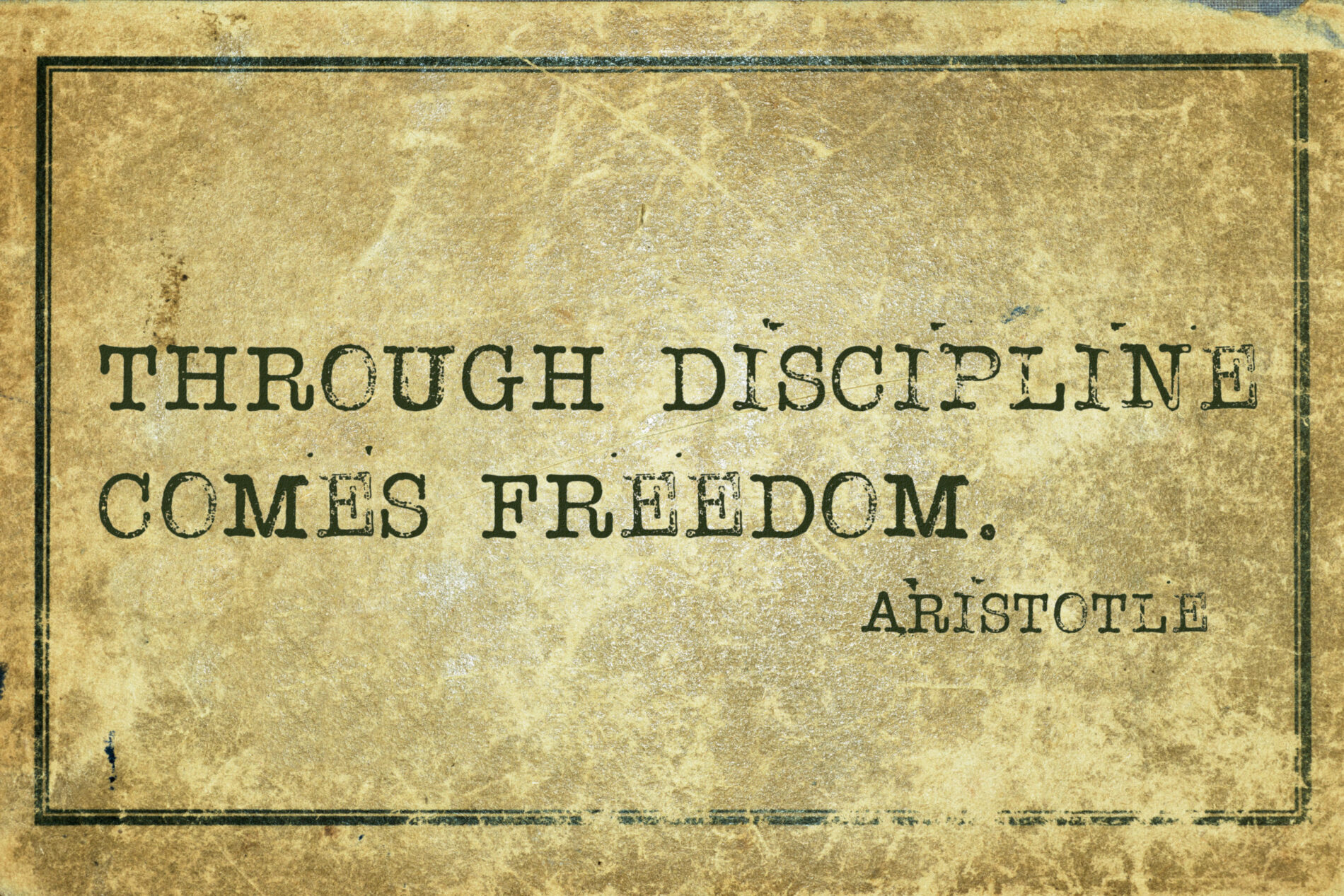
    There are two types of self-awareness that need to be expanded on: Internal Self-Awareness and External Self-Awareness.

    Internal Self-Awareness is how well you know yourself, and External Self-Awareness is how well you understand how others see you. Both of them are important, and neither alone is sufficient. The intersection of these two metrics is how you diagnose and solve the problems that you face personally.

    Unless you’re highly self-aware both internally and externally, you’re not living up to your full potential as an employee, or as a person.

    These two metrics were well explained by Dr Tasha Eurich, published in the Harvard Business Review and explained in the diagram to follow.

    4 Self Awareness

    I can speak to this chart personally.

    Early in my career I would focus on specific numbers, to the point where it was causing problems with work relationships, exactly what the “Introspectors” corner talks about in the diagram above.

    I would only focus on how right my numbers were, and any other opinions be damned: I was right.

    After years of frustration, I became more externally self-aware, realizing that the bottom line isn’t the end-all, be-all in arguments.

    Without the external self-awareness, I was unable to see the whole picture, much less have a road map for where I should be going.

    For yourself, you need to look inward and ask:

    What characteristics are you utilizing to be successful?

    What characteristics are you utilizing that you think should, but just aren’t working?

    Are you willing to acknowledge that you have room to improve?.

    These questions transition to talking about the above quadrants:

    1. Being honest about your current state, knowing who you are. This includes your identity, your communication style, your leadership style, core beliefs, biases and being aware of the biases
    2. Your reputation: are you a problem solver, do you eliminate problems, or do you simple give hope to people who will inevitably will be betrayed by your failure.
    3. Having a backbone