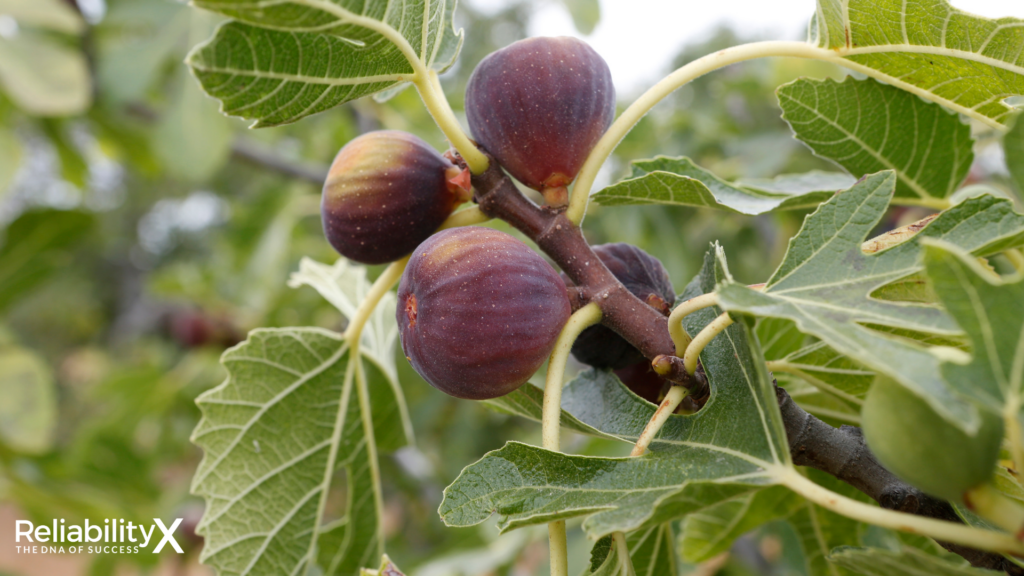
In yesterday’s video, George shared a story about his fig tree. It’s a simple story, but it says a lot about how we run maintenance and reliability.
George travels often, and this year the road won. He didn’t keep the tree down to about five healthy stalks. He didn’t clear out the center. He skipped the work this tree needs to produce plenty of properly ripened fruit by this time of year. The result is a tree full of figs he can’t eat.
The tree never negotiated
The fig tree didn’t care that George was busy. It didn’t care that he wasn’t in the mood to prune. It did what it always does, which is take in sun and nutrients and grow. What it produced came down to the environment it was given.
Air couldn’t move through the center, so growth suffered there. Too many stalks meant the tree spread its energy thin and had little left for the fruit.
Your assets work the same way
Every asset in your facility has a set of requirements. Lubrication at the right interval. Alignment within tolerance. Clean, dry, properly specified components. Tasks that match the way it actually fails.
When we run overtime and push the PMs back, the asset doesn’t adjust its expectations. When the right tasks are missing from the plan, it doesn’t compensate. When the cheaper part goes in, it doesn’t perform like the better one. It keeps doing what it does, based on the care it received.
Then it fails to produce, and we get upset about it. That reaction is backwards. The asset delivered exactly what we set it up to deliver.
What it costs
When the standard of care slips, the damage shows up in three places. Quality suffers. Production suffers. The value we get from the asset suffers. Those losses rarely trace back to one bad day. They build from a long series of small choices to skip, delay, or downgrade.
We don’t get a vote
This is the uncomfortable part. We don’t get to decide the asset will perform anyway. George didn’t get to decide the tree would grow great fruit in spite of the neglect. You bought the asset, just like he bought the tree, and the responsibility to care for it came with the purchase.
What to do about it
- Define what each critical asset requires. Use the OEM guidance, your failure history, and your FMEA or criticality work. If you can’t state the requirements, you can’t hold a standard.
- Match your tasks to those requirements. Check that your PM tasks address the failure modes that actually happen, not just the ones that were easy to write down.
- Protect the schedule. Overtime pressure is real, but pulling PMs to cover it is a trade you should make on purpose, with the cost in view.
- Review parts and materials decisions. A cheaper part that shortens asset life costs more than the part it replaced.
- Measure compliance against the standard. Track what the asset requires against what it received, and close the gap.
The standard decides the harvest
Anything below the standard doesn’t bear fruit. That’s true for a fig tree and it’s true for a critical pump, a conveyor, or a production line.
This week, pick one critical asset and write down what it requires for optimal performance. Then compare that list to the care it’s getting. The gap you find is where your next loss is waiting.
Take the next step
- Watch the video: If you haven’t seen George’s fig tree story yet, watch it on the ReliabilityX channel.
- Subscribe to ReliabilityX: We share practical maintenance and reliability content for people who work with equipment every day.
- Join the conversation: Tell us in the comments what your version of the fig tree looks like. Which asset at your site isn’t getting what it requires right now?
- Share it with your team: Send this to the person who owns your PM program, your planner, or your site leader. A standard only holds when everyone knows what it is.